The good, The Bad, & How To Make Your Own
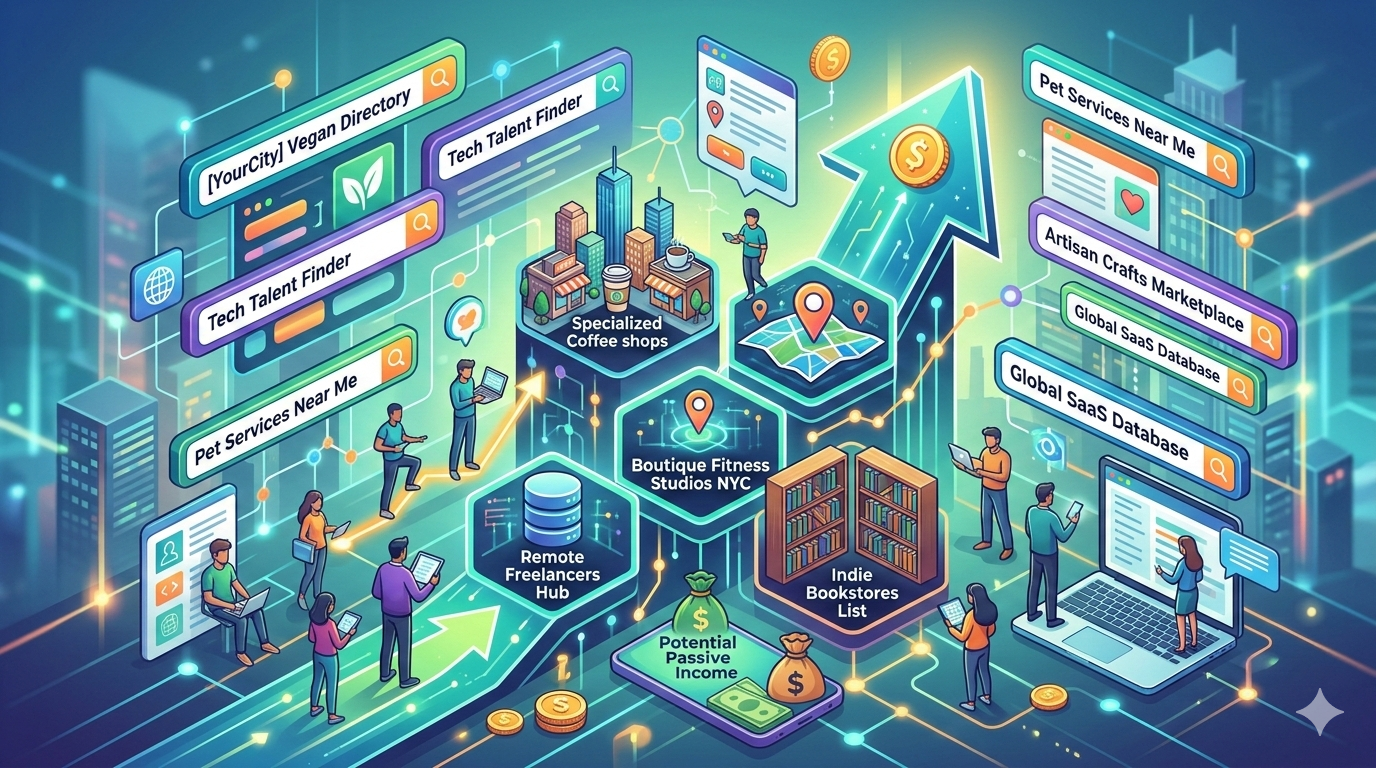
This guide I’ve created, provides a quick but quality roadmap to building your own niche-specific online directory.
Currently, an online directory has evolved from a simple list of links, into an interim ‘trust’ layer that solves discovery problems for visitors while also providing highly qualified leads for businesses at the same time.
1. Finding The Next Goldmine Niche
The secret to a successful directory is avoiding the “everything for everyone” trap. General directories cannot compete with Google or Yelp (obviously!). However, a hyper-focused directory for “Sustainable Tiny Home Builders in the Pacific Northwest” or “Landscaping Resources in central Florida” can dominate its corner of the internet MUCH easier, and with much less competition. Meaning you can rank in Google easier, quicker, with faster results. This also automatically pre-qualifies your visitors to being interested in that specific topic.
Some random 2026 High-Value Niche Ideas: (use Google or AI to easily generate endless list of ideas if you’re stuck on where to start!)
- The Wellness Revolution: Longevity clinics, biohacking specialists, or mental fitness retreats.
- The Tech Frontier: Specialized AI agents, smart contract auditors, or “Human-Only” service providers.
- The Sustainable Shift: Circular economy platforms (repair, lease, and reuse) and green micro-grid installers.
- Hyper-Local Professional Services: Vetted tradespeople (EV charger installers, flood restoration) for specific counties, states or cities.
2. Why Should They Visit? Create VALUE
For visitors, value comes from curation and verification. If anyone can list themselves, the directory is spam. If you personally vet every listing, you are a trusted advisor.
- Programmatic SEO: Build your site architecture so it automatically generates “Best [Niche] in [City]” pages. This ensures you capture “near me” search traffic.
- Rich Data: Don’t just list a phone number. Include pricing signals, video tours, verified reviews, and real-time availability.
- Comparison Tools: Allow users to filter by specific attributes (e.g., “Eco-friendly certification” or “Accepts Bitcoin”).
3. Passive Income & Monetization Models To Use Inside Your Directory Site
A directory is one of the best vehicles for passive income because the users (the businesses) provide the content, and the platform provides the audience.
| Model | How it Works | Best For |
| Paid/Featured Listings | Businesses pay a monthly fee for top placement. | High-competition niches like Real Estate or SaaS. |
| Pay-Per-Lead (PPL) | You charge the business for every inquiry sent through your site. | High-ticket services like Legal, Medical, or Home Renovation. |
| Affiliate Commissions | You earn a % when a user buys a product via a link. | Software, AI tools, or Pet Care products. |
| Google Adsense | Sign up and let Google display ads that you’re paid to display | Everyone – General monetization strategy |
4. The Technical Blueprint For This:
You no longer need a developer to build a profitable online directory.
The Low or No-Code Path:
- Platform: WordPress is still king for directories due to SEO flexibility.
- Plugin: Use a dedicated directory plugin like Directorist or Classified Listing. They handle the database, search filters, and payment gateways out of the box.
- Hosting: Use Managed WordPress hosting (e.g., Hostinger, Kinsta) to ensure sub-2-second load times, which is critical for 2026 SEO.
- AI Integration: Use AI agents to scrape initial data to “seed” the directory (ensure you have the legal right to do so) and to summarize reviews.
5. Solving the Problem Of Simply Getting Started
The biggest challenge is that businesses won’t pay if you have no traffic, and you have no traffic if you have no listings. Here’s a quick phase layout of how you could possibly start your own online directory!
- Phase 1 (Days 1–30): Seed the directory yourself. Manually add the top 50–100 businesses in your niche for free. This makes the site look lived in.
- Phase 2 (Days 31–60): Reach out to individual businesses on on your directory. Tell them they have a “Basic” listing and offer a free 3-month trial of a “Featured” listing in exchange for a backlink or testimonial.
- Phase 3 (Days 61+): Once you have organic traffic (trackable via Google Search Console), start charging for the “Featured” tier.
6. Legal Check!
In 2026, privacy laws (like the new 2026 statutes in Indiana and Rhode Island) are stricter than ever, unfortunately.
- Privacy Policy: Must explicitly state what data is collected and how it is shared.
- Cookie Consent: Use a functional banner that allows users to opt-out of “targeted advertising.”
- ADA Accessibility: Ensure your site is navigable with keyboard and screen readers to avoid “surf-by” lawsuits.
So In Summary:
- Pick a Niche: Find a gap where discovery or quality info is currently difficult.
- Build the Trust: Focus on verified, high-quality data.
- Monetize Early: Don’t wait for a million visitors; 100 high-intent visitors are worth more to a business.
- Automate: Use tools to handle renewals, lead notifications, and data updates.
It would be fun to start a handful of these, to see how well they fare. Have any other suggestions for starting your own directory website? Let me know! Peace.
Leave a Reply