So, let’s say you’re trying to find a.. reliable mold specialist in your area. You open Google, scroll through pages of Yelp reviews that all sound suspiciously similar, and wonder which ones are actually written by real humans who’ve had real experiences…
This is becoming an actual REAL problem.
These days where AI-generated fake reviews are flooding every directory and review site, trust is officially broken. People are desperate for sources they can actually believe in…especially when it comes to important decisions about their homes, health, businesses & wealth.
Here’s my thought.. human-vetted niche directories aren’t just a convenient concept anymore.. they’re becoming the biggest passive income opportunity of 2026. And the best part is that you don’t need to know how to code to build one anymore!
The Trust Crisis in Online Directories
Let’s talk about why traditional directories like Yelp, Angie’s List, and even Google Maps are losing credibility fast..
It’s not just about a few fake reviews here and there.. we’re talking about full systematic, AI-generated content designed to manipulate rankings and trick consumers.
These fake reviews aren’t just annoying.. they’re actually dangerous.. When someone’s choosing a contractor for electrical work or a longevity clinic for hormone therapy, fake positive reviews can lead to real harm.
The verification systems these big platforms use are outdated, easily gamed, and completely overwhelmed by the scale of AI content flooding in.
What we’re seeing is a complete reversal of what made directories valuable in the first place. Instead of being trusted hubs of local knowledge, they’ve become marketplaces where the loudest (or most AI-optimized) voice wins.. not the most honest or experienced reviews.
The Human-Vetted Alternative: Trust Hubs
Enter the human-vetted niche directory, what I like to call a “trust hub.” This isn’t just another directory with a fancy verification badge.. No no! It’s a carefully curated ecosystem where every single listing has been manually verified by a real human who understands the industry / niche and can provide actual valuable insight into which companies may work best for them.
Think of it like this.. instead of trusting an algorithm to spot fake reviews, you’re trusting a person who actually knows what legitimate work looks like in that specific niche. They’re checking licenses, making shadow calls, verifying insurance, and looking for those subtle tells that separate the pros from the pretenders.
And because you’re focusing on a specific niche.. let’s say, sustainable home retrofitting.. AI compliance consulting, you can go deep. You’re not trying to be everything to everyone, you’re becoming the definitive authority in one specific area where trust is one of, if not the most important thing!
Why No-Code Tools Are Perfect for This
Now, you might be thinking: “This sounds great, but building and maintaining a directory with manual verification sounds like a ton of work.” And you would be right.. if you were trying to code everything from scratch.
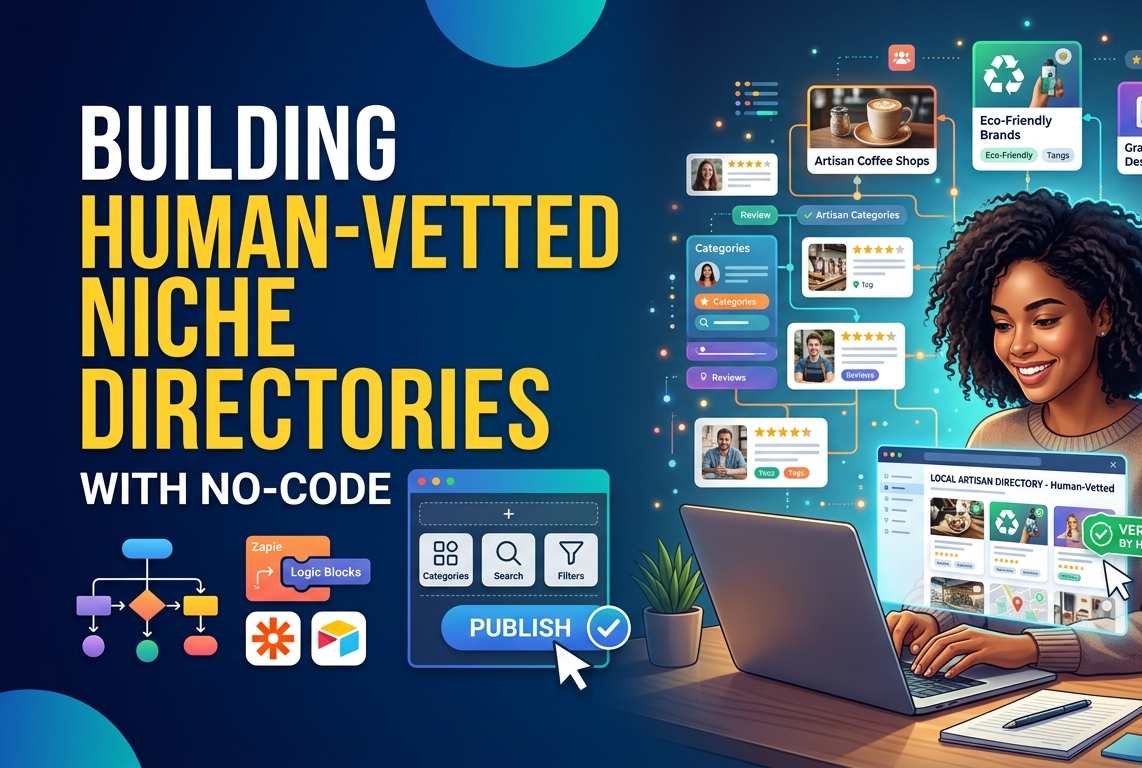
But here’s where modern no-code tools change the game completely. With platforms like Softr, Airtable, and Make.com, you can build a sophisticated directory with automated workflows that handle 80% of the grunt work, leaving you free to focus on the high-value human verification tasks.
Let me break down how this actually works in practice:
Airtable becomes your backbone—it’s where you store all your business listings, verification notes, license documents, and communication history. You can set up different views for pending verification, approved listings, and expired certifications.
Softr turns that Airtable base into a beautiful, searchable directory website with zero coding. Members can search by location, specialty, or certification level, and you get built-in user accounts, payment processing, and SEO optimization.
Make.com (formerly Integromat) handles the automation magic—it can automatically check license expiration dates, send renewal reminders to businesses, trigger verification workflows when new listings come in, and even pull in public data from government databases to pre-fill application forms.
The Verification Workflow That Actually Scales
This is where most people get stuck—they imagine having to manually verify every single aspect of every business, which obviously doesn’t scale. But the trick is to create a tiered verification system that focuses human effort where it matters most.
Here’s how I would personally structure this:
First, automate everything you can. Use Make.com to check if a business license exists in state databases, verify basic insurance coverage through public records, and scrape websites for service area and contact information.
Second, create a verification checklist that your human verifiers actually use. This isn’t just “does this business exist?”—it’s specific, actionable items like:
- Does their license match the services they advertise?
- Have there been any complaints filed with the state licensing board?
- Do they carry the specific types of insurance needed for this type of work?
- Can we verify at least two recent customer references through direct contact?
Third, batch your verification work. Instead of verifying one listing at a time, set aside specific verification blocks where you process 10-15 applications in a row. This builds efficiency and helps you spot patterns or red flags that might be missed when verifying sporadically.
Making It Profitable: The Trust Premium
Now let’s talk potential cash flow.. because if this isn’t profitable, it’s just a hobby. The beauty of human-vetted directories is that you can charge premium prices precisely because you’re offering something the AI-powered giants can’t: genuine trust.
For niches like emergency home infrastructure (plumbing, electrical, HVAC), longevity/wellness clinics, or AI compliance consulting, businesses are often paying $50-200 per qualified lead. When you can demonstrate that your leads come with a human-verified trust badge, conversion rates go through the roof.
I’d recommend starting with a free basic listing to build initial traction, then offering tiered paid options:
- Free: Basic NAP (name, address, phone) with limited visibility
- Verified ($49/month): Includes human verification badge, priority placement, and lead notifications
- Premium Verified ($99/month): All verified features plus featured placement, analytics, and direct booking options
The key insight here is that you’re not just selling directory placement, you’re selling risk reduction! For businesses in high-trust niches, that verification badge means they stand out in a sea of unverified competitors and can justify higher prices themselves.
Getting Started: Your First 30 Days
Okay, let’s get practical. If you’re excited about this opportunity, here’s exactly how I’d approach building your first human-vetted niche directory in the first month:
- Week 1: Pick your niche and research the verification requirements. What licenses matter? What are the common pain points customers have finding trustworthy providers? Join 2-3 Facebook groups or forums in your niche to listen to real conversations.
- Week 2: Set up your Airtable base with fields for business info, verification status, license numbers, insurance details, and notes. Build your Softr site using a directory template—focus on clean search and mobile responsiveness first.
- Week 3: Create your verification workflow in Make.com. Start simple: automate license checks and expiration reminders. Design your verification checklist based on what you learned in week 1.
- Week 4: Onboard your first 10-15 businesses manually. This part is crucial, you want to refine your verification process with real applications before worrying about scale. Ask for feedback on both the application process and the value they’re seeing from being listed.
Have you thought about making your own human-vetted niche directory? If so let me know how it’s going, or if you have any questions below! Take care – Josh