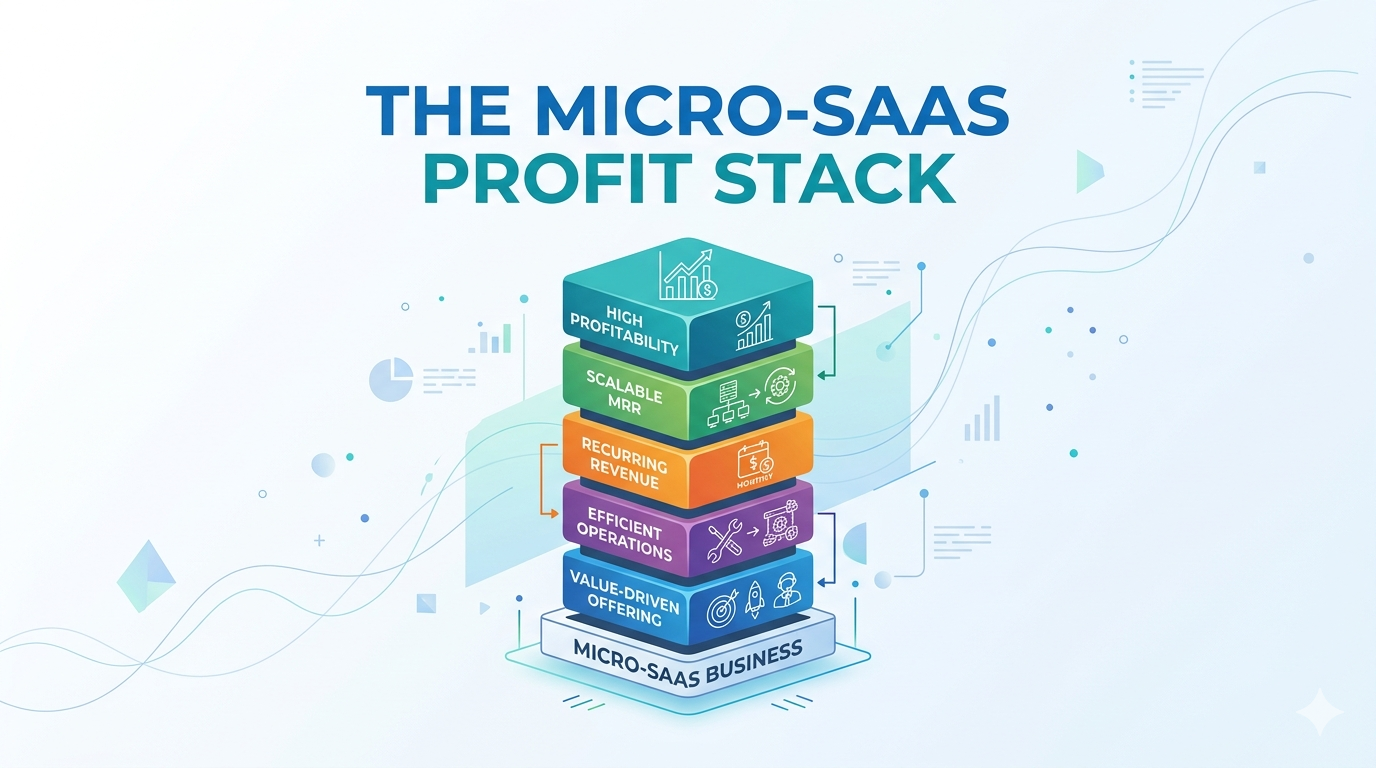
Just for a second, imagine you’re trying to build a SaaS product. You’ve got this grand vision of an all-in-one platform that does everything for your niche audience..
But here’s the thing — that “everything” app is probably going to kill your profitability before you even launch.
What if building multiple tiny, focused tools actually makes more money than building one complex beast?
Let me explain the problem with the “one big app” approach most founders fall into. It’s what i call The Complexity Trap — where you keep adding features because “it would be nice to have” or “our competitors have it.”
Before you know it, you’re spending 80% of your time on edge cases, integrations, and maintaining code that maybe 5% of your users actually use.
Your development slows to a crawl, your hosting costs creep up, and your profit margins? They get squeezed right out of existence.
Plus, when something breaks (and it will), the whole app goes down. Not ideal when you’re trying to run a profitable business.
i’ve seen this happen so many times with talented builders who just couldn’t resist adding “just one more feature.”
The Profit-Per-Tool Mindset
Instead of chasing one big product that tries to do everything, think about building a stack of tiny tools — each one laser-focused on solving a single painful problem for a specific group of people.
Each tool in your stack should be profitable on its own. Not “profitable someday at scale” — profitable right now with a small, dedicated user base.
Let’s say you’re targeting local contractors. Instead of building one contractor management suite that does estimating, invoicing, scheduling, and CRM.. you could build:
- A simple job estimating tool that lets contractors create professional quotes in 2 minutes
- A invoice tracker that sends automatic payment reminders via SMS or email
- A material cost calculator that updates with local supplier pricing from Home Depot or Lowe’s
Each solves one problem well. Each can be marketed, sold, and supported independently. And crucially — each can be profitable with just hundreds of customers paying $10-30/month.
i know what you’re thinking — “but won’t that be more work to maintain multiple tools?” Actually, no. Because each tool is so simple, updates and bug fixes take minutes instead of days. You can literally build and launch a new micro-tool in a weekend using tools like Softr, Airtable, and Stripe.
Vertical Stacking Within Your Niche
This is where the personal niche monopoly concept really shines. You’re not just building random tools — you’re building a vertical stack that owns different layers of the same niche workflow.
Think about it like this: your potential customer has a journey from problem to solution. At each step, there’s an opportunity to provide value with a focused tool.
For example, in the home services niche:
- Lead capture tool – helps contractors get more job inquiries from their website (think simple Typeform or Tally integration)
- Estimating tool – turns those leads into professional quotes fast (maybe built with Carrd and Stripe)
- Scheduling tool – manages their crew and job timelines (Google Calendar integration + custom interface)
- Follow-up tool – automates requests for reviews and referrals (Zapier + Gmail automation)
Each tool addresses a different stage of the customer journey. You can cross-sell between them naturally (“Hey, since you’re using our estimating tool, you might love our scheduling tool for managing those jobs you just quoted!”).
And here’s the kicker — when you own multiple touchpoints in your customer’s workflow, you become much harder to replace. They’re not just buying a tool; they’re buying part of their business infrastructure.
i’ve watched contractors stick with tools for years not because they’re the fanciest, but because they’re deeply embedded in how they run their daily operations.
The 20x Profit Validation Rule
Remember from the MVS framework that the goal isn’t 100K signups — it’s 100 paying customers who love what you built. With a micro-SaaS stack, you apply this rule to each tool individually.
Your validation process looks like this:
- Identify one specific, painful problem in your niche
- Build the absolute simplest version that solves it (could even be a manually delivered service at first)
- Find 20 people who would pay at least 5x what you plan to charge
- If you can’t get those commitments, pivot or kill the idea fast
Let’s say you’re thinking about a tool for coffee roasters to track batch consistency. Instead of building a full-featured roasting log with social sharing, analytics dashboards, and mobile apps.. you start with a simple Google Sheet template that calculates roast deviation percentages.
You show it to 20 coffee roasters and ask: “Would you pay $10/month for this if it saved you from ruining one batch per month?” If 10+ say yes enthusiastically, you’ve got validation. If not, you iterate or move on.
This approach keeps your development focused and your risk low. You’re not spending months building features nobody asked for — you’re proving profitability before you write much code at all.
i like to use Gumroad for quick validation — you can sell access to a Notion template or Airtable base in under an hour and see if people will actually pay for your solution.
The Flywheel Effect of Multiple Tools
This ties back to the creator flywheel concept, but applied to your tool stack. Each profitable tool in your portfolio creates opportunities for the others.
Here’s how it works in practice:
- Your estimating tool builds an email list of contractors who need job-related solutions (you collect emails with a free quote template)
- When you launch your invoicing tool, you already have a warm audience to sell to (you email your estimating tool users about the new launch)
- Those invoicing tool users become ideal customers for your upcoming scheduling tool (they’re already paying you and trust your brand)
- Each tool launch gets easier because you’re not starting from zero (you have existing customers, testimonials, and case studies)
Plus, you can bundle your tools strategically. Maybe you offer:
- Estimating tool alone: $15/month
- Estimating + Invoicing bundle: $25/month (save $5)
- Full stack (all 4 tools): $40/month (save $20)
Suddenly your average revenue per user goes up, your churn goes down (because leaving means giving up multiple tools), and your marketing becomes more efficient.
It’s not just about having multiple income streams — it’s about creating a portfolio where the whole is worth more than the sum of its parts.
i’ve seen this work beautifully with niche tools serving specific industries like HVAC technicians, tattoo artists, or food truck owners.
Real Tools You Can Use Today
Let’s get practical — here are actual platforms you can use to build and launch these micro-tools without writing complex code:
For the tool itself:
- Softr + Airtable – turn a spreadsheet into a functional web app with user accounts and payments
- Bubble – more powerful but still visual programming for complex logic
- Carrd + Stripe – for ultra-simple one-page tools with payment processing
- Notion + Super.so – turn a Notion database into a public-facing tool or directory
For automation and integrations:
- Zapier or Make.com (formerly Integromat) – connect your tools to email, calendars, and other services
- Tally or Typeform – for beautiful lead capture forms that feed into your tools
- ConvertKit or MailerLite – for email marketing to your tool users
For validation and sales:
- Gumroad – sell access to Notion templates, Airtable bases, or simple web tools instantly
- Lemon Squeezy – handle payments, taxes, and subscriptions for your micro-tools
- Product Hunt – launch and get early feedback from maker communities
The beautiful thing is you can start with literally zero coding skills. i’ve seen builders launch profitable micro-tools in under a week using just these platforms.
- Start with one hyper-specific problem in your niche — not a category of problems (like “invoicing for coffee shops” not “business management for coffee shops”)
- Build and validate each tool independently using the 20x profit rule before moving to the next (aim for 20 validating conversations per tool)
- Design each tool to naturally lead to the next in your customer’s workflow (think about what they need before and after using your current tool)
- Cross-promote between your tools using your existing customer base as a launchpad (email your Tool A users when you launch Tool B)
- Consider strategic bundling to increase LTV while keeping individual tools simple and focused (offer discounts for buying multiple tools from your stack)
Building a micro-SaaS stack isn’t about having less ambition — it’s about channeling your ambition into something that actually works. Instead of betting everything on one moonshot app that might never find profitability, you’re creating multiple shots on goal, each with a real chance to pay the bills.
And the best part? You get to learn, adapt, and improve with each tool you launch. Your first tool teaches you about your niche, your second tool teaches you about pricing and bundling, and by your third or fourth tool, you’ve got a real business — not just a hopeful startup.
i hope this has helped you see the profit potential in thinking small and stacking smart. Give it a try — your future self (and your bank account) will thank you.
seeya!